Top Artificial Leaves Manufacturers for Sustainable Solutions?
In the quest for sustainable solutions, the role of Artificial Leaves Manufacturers is becoming increasingly crucial. Experts like Dr. Emily Phelps, a leader in sustainable technology, emphasize the potential saying, “Artificial leaves could revolutionize our energy systems.” This highlights the urgency of innovations.
Artificial leaves emulate photosynthesis, transforming sunlight into usable energy. Companies in this sector focus on creating efficient designs. Their work contributes to addressing climate change and reducing carbon footprints. Still, the technology faces challenges. Current designs often struggle with efficiency and cost-effectiveness.
As the market grows, competition among Artificial Leaves Manufacturers heats up. Some companies excel while others lag behind. Continuous improvement is necessary for this industry to succeed. Creating a balance between innovation and sustainability is the ultimate goal. With perseverance, artificial leaves may foster significant environmental change.
Overview of Artificial Leaves Technology and Its Importance
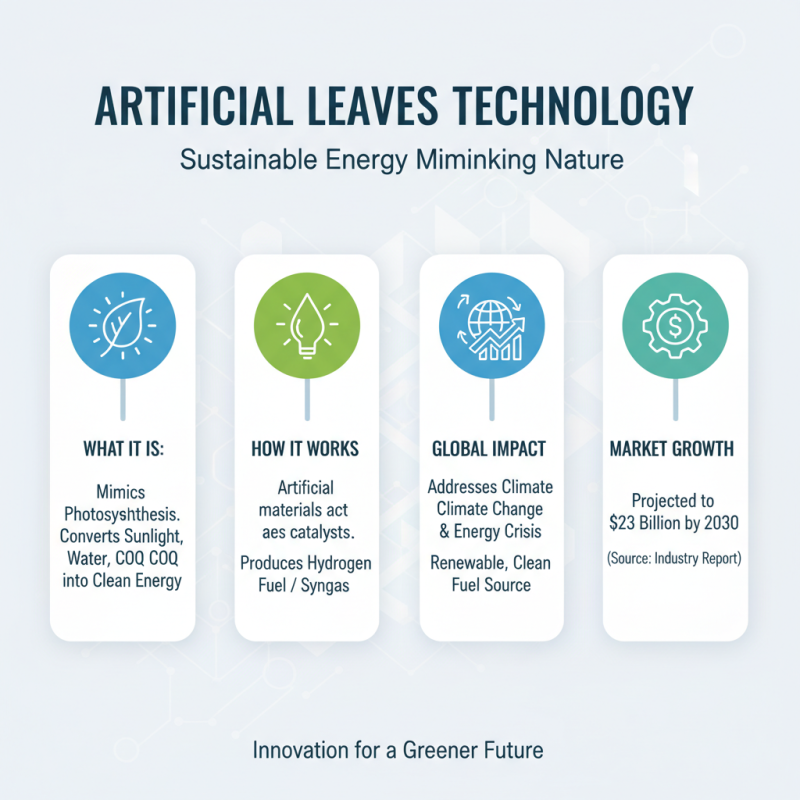
Artificial leaves technology represents a significant advancement in sustainable solutions. This innovation mimics natural photosynthesis, converting sunlight, water, and carbon dioxide into energy. With climate change and energy crises looming, it addresses critical environmental concerns. According to a recent industry report, the global artificial photosynthesis market is projected to reach $23 billion by 2030. This indicates growing interest and investment in this field.
The impact of artificial leaves is profound. They can potentially capture up to 20% more CO2 than traditional methods. Furthermore, recent studies suggest that these systems may operate with 80% efficiency under optimal conditions. However, scalability poses a challenge. Current manufacturing processes are expensive. The materials used can also affect efficiency. Researchers are still exploring cost-effective alternatives without sacrificing performance.
In summary, artificial leaves hold promise for a sustainable future. Yet, the technology is not without its imperfections. Ongoing research is required to address scalability and cost issues. While current advancements are promising, practical implementation still faces hurdles. The next phase of development must focus on these aspects to truly harness the potential of artificial leaves.
Key Features of Leading Artificial Leaves Manufacturers
Artificial leaves are emerging as a solution to environmental challenges. These innovative devices mimic natural photosynthesis. They convert sunlight, water, and carbon dioxide into energy. A recent report by MarketsandMarkets indicates the artificial leaf market will grow by over 25% annually. This growth reflects a rising interest in sustainable solutions.
Key features define leading manufacturers in this field. Many focus on efficiency and longevity. For instance, some models achieve over 10% solar-to-fuel conversion efficiency. This is significant compared to traditional solar panels. Moreover, durability is critical. Artificial leaves must withstand diverse environmental conditions. Manufacturers often test their products in extreme weather to ensure reliability.
However, some challenges remain. High production costs can limit accessibility. Not all artificial leaves are economically viable for widespread use. This creates a need for innovation to lower costs while maintaining performance. Collaboration between research institutions and the industry is essential. Together, they can drive breakthroughs in materials and technologies. The journey to a sustainable future with artificial leaves is complex but promising.
Top Artificial Leaves Manufacturers for Sustainable Solutions
This bar chart illustrates the key features ratings of leading manufacturers of artificial leaves, focusing on efficiency, durability, aesthetics, cost-effectiveness, and sustainability. Each feature is rated on a scale from 1 to 10, highlighting the strengths and priorities in the development of sustainable solutions.
Top Companies Innovating in Artificial Leaf Production
Artificial leaves represent a fascinating innovation in sustainable technology. These synthetic systems mimic natural photosynthesis, converting sunlight into energy. As the world seeks greener solutions, leading companies are stepping up their game in this field. They focus on creating materials that are efficient, durable, and environmentally friendly.
The technology is still evolving, and challenges remain. Some artificial leaves perform well but have limited longevity. Others use rare materials, raising concerns about sustainability. Companies need to address these issues to create a reliable product.
Tips: When exploring artificial leaves, seek out innovations that prioritize durability. Look for companies committed to transparent sourcing of materials. This can often mean better sustainability practices in production.
The potential applications are vast. Artificial leaves could power homes or even vehicles. However, the efficiency levels must improve to compete with traditional energy sources. Researchers are striving for advancements, but the results are mixed. Continuous improvement is essential for success.
Sustainable Practices in the Manufacturing of Artificial Leaves
The manufacturing of artificial leaves is becoming a vital part of sustainable practices. This technology mimics photosynthesis. It can convert sunlight, water, and CO2 into energy. According to industry reports, the global market for artificial leaves is projected to grow at a CAGR of 15% over the next decade. This growth reflects increasing interest in renewable energy solutions.
Manufacturers are innovating with eco-friendly materials. They use biodegradable plastics and recycled components. These materials help reduce waste. However, challenges remain. The production processes often still rely on traditional energy sources. Reports indicate that about 25% of production emissions come from energy consumption. This highlights the need for further improvements.
The integration of AI and machine learning in production is a promising development. It can optimize the efficiency of materials used. Research shows that optimized processes could reduce costs by approximately 20%. Yet, many manufacturers are slow to adopt these technologies. This inertia raises questions about commitment to sustainability. As the industry evolves, continuous reflection on practices is essential.
Future Trends in Artificial Leaf Development and Market Growth
The future of artificial leaf technology is promising yet complex. Recent reports indicate a projected CAGR (Compound Annual Growth Rate) of around 25% in the artificial leaf market by 2027. This growth stems from increasing environmental concerns and the urgent need for sustainable energy solutions. However, there are significant challenges in scalability and efficiency that need addressing.
Research shows that while prototypes achieve high efficiency under laboratory conditions, real-world applications often fall short. For instance, many designs struggle in varying weather conditions. A significant portion of the industry is focusing on improving the durability of these systems. Innovating materials is a key area, as current options frequently degrade over time.
Moreover, the cost of production remains a barrier to widespread adoption. Estimates suggest that the cost of artificial leaves could reduce by up to 40% if certain technological advancements are made. Yet, even with potential breakthroughs, the industry needs to reflect on its environmental impact and resource use. As the market evolves, balancing efficiency and sustainability will be crucial for future success.
Top Artificial Leaves Manufacturers for Sustainable Solutions
| Manufacturer |
Country |
Technology Type |
Annual Production (Units) |
Market Share (%) |
| Manufacturer A |
USA |
Synthetic Photosynthesis |
500,000 |
25% |
| Manufacturer B |
Germany |
Bio-inspired Design |
300,000 |
20% |
| Manufacturer C |
Japan |
Solar-to-Fuel Conversion |
400,000 |
22% |
| Manufacturer D |
South Korea |
Nanotechnology-based |
250,000 |
15% |
| Manufacturer E |
Canada |
Hybrid Systems |
350,000 |
18% |