China Top 10 Artificial Leaves Suppliers You Should Know?
The market for artificial leaves is rapidly expanding, driven by environmental concerns and innovative design alternatives. According to a recent report by MarketsandMarkets, the global market for artificial foliage is projected to reach $16.52 billion by 2027, showcasing a significant growth potential. This surge underscores the increasing demand for effective and sustainable solutions.
Understanding the landscape of suppliers is crucial for businesses seeking high-quality products. Several artificial leaves suppliers excel in providing innovative options that meet various industry needs. These manufacturers focus on delivering durability and lifelike aesthetics while integrating eco-friendly materials.
However, not all suppliers maintain the same standards of quality and sustainability. Evaluating their offerings critically can help purchasers identify the best partners. Researching suppliers and understanding their reputations is essential in navigating this growing market. This article will explore the top 10 artificial leaves suppliers in China, offering insights into their capabilities and contributions to the industry.
Overview of Artificial Leaves and Their Applications in China
Artificial leaves are becoming an innovative solution in China. These synthetic devices mimic the process of photosynthesis, turning light into chemical energy. Their applications range from environmental solutions to providing renewable energy resources. In urban areas, they can help tackle air pollution. By absorbing carbon dioxide, they contribute to cleaner air.
Many industries are exploring the potential of artificial leaves. In the renewable energy sector, they offer a way to generate sustainable power. Some companies utilize these leaves in the agricultural sector, enhancing crop yields. The technology is still developing, and there are challenges to address. Efficiency and cost-effectiveness remain key issues for wider adoption.
In addition to energy generation, artificial leaves may find roles in atmospheric research. Scientists use them to study plant interactions with the environment. However, the long-term sustainability of these materials is still under scrutiny. Balancing innovation with ecological impact is vital for their future. Artificial leaves represent a fascinating intersection of technology and nature. The journey to perfecting this technology will require collaboration from experts in various fields.
Top 10 Artificial Leaves Suppliers in China
Key Criteria for Selecting Top Artificial Leaves Suppliers
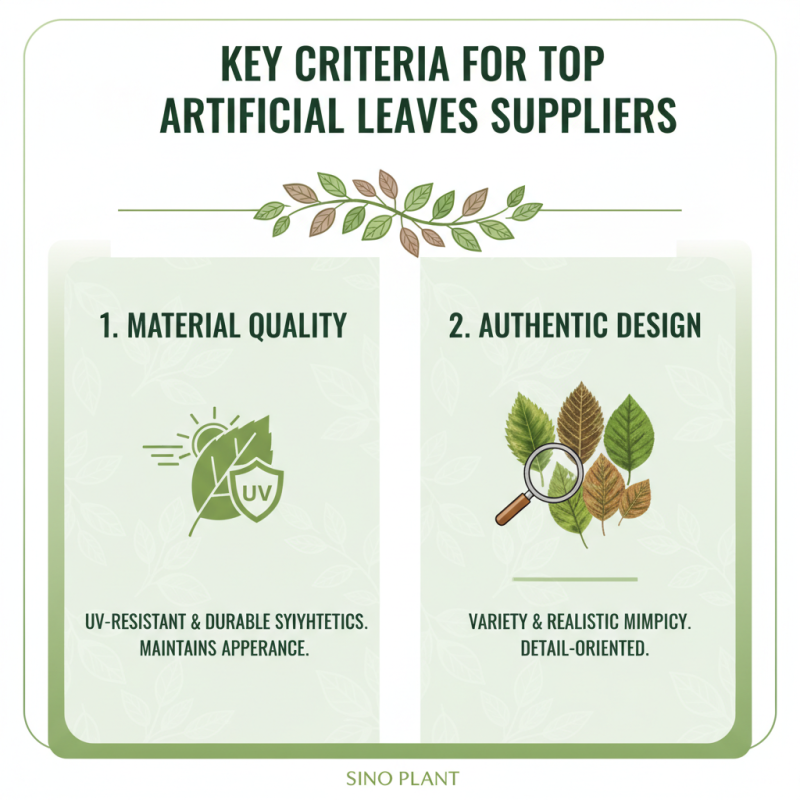
When selecting artificial leaves suppliers in China, several key criteria emerge. The quality of materials used is crucial. Suppliers should use UV-resistant and durable synthetic materials. This ensures the leaves maintain their appearance over time. Authenticity in design also matters. Suppliers should offer a variety of styles that mimic real foliage. Look for those who pay attention to detail, from vein patterns to color variations.
Another important factor is the supplier's experience. A long history in the industry often indicates reliability. Established suppliers understand market trends better. It's also worth checking for customer reviews. Positive feedback can signal a supplier's commitment to quality and service. Additionally, consider the variety of products they offer. A diverse product range usually reflects creativity and adaptability. Pricing is important, but the lowest price might not guarantee good value. It’s a balance between cost and quality.
Logistics is another aspect to consider. Can the supplier meet delivery timelines? Consistent delays can disrupt your planning. Finally, look for suppliers open to customization. They should be willing to adapt their products to meet your unique needs. This flexibility can be a game-changer in the competitive market of artificial leaves.
List of the Top 10 Artificial Leaves Suppliers in China
When exploring the world of artificial leaves, China stands out as a leading hub for suppliers. The market is diverse, offering a wide range of artificial foliage products. These suppliers cater to various needs, from decorative purposes in homes to large-scale projects in commercial spaces. Many suppliers emphasize eco-friendly materials, appealing to environmentally conscious consumers. The durability of these products often surpasses natural plants, which makes them a practical choice.
Understanding the selection can be challenging. Some suppliers focus on high-quality materials, ensuring a realistic appearance. Others may offer cost-effective options that compromise on authenticity. It’s essential to consider factors such as manufacturing processes, customer reviews, and return policies when making choices. Many suppliers showcase their products online, providing images and specifications that help buyers make informed decisions.
Selecting a supplier requires careful thought. Some may excel in customer service but lack variety. Others might have an extensive catalog but limited support. Engaging with suppliers through inquiries can reveal their expertise and commitment to quality. Personal experiences, both positive and negative, shape your understanding of the market landscape. Ultimately, evaluating these suppliers based on experience and reliability will guide you toward the best choices for your needs.
Comparison of Manufacturing Techniques Used by Chinese Suppliers
The manufacturing techniques of artificial leaves in China vary widely among suppliers. Key methods include 3D printing, electrospinning, and bio-inspired synthesis. A report from the China National Chemical Information Center notes that 3D printing is rapidly gaining traction. This technique allows for rapid prototyping and customization, adapting designs to consumer needs.
Electrospinning remains popular for its ability to produce nanofibers. This method yields high surface area and porosity, essential for enhancing photosynthetic efficiency. According to industry data, manufacturers are now focusing on reducing environmental impact during production. This shift toward sustainability is critical as concern for eco-friendly materials grows.
However, there are challenges. The consistency of quality across products can be an issue. Ensuring reliability in mass production requires advancements in quality control. Many suppliers are still struggling to maintain standards while scaling up. Despite impressive technological advancements, the gap between innovation and practicality persists in the industry.
Future Trends in the Artificial Leaves Market in China
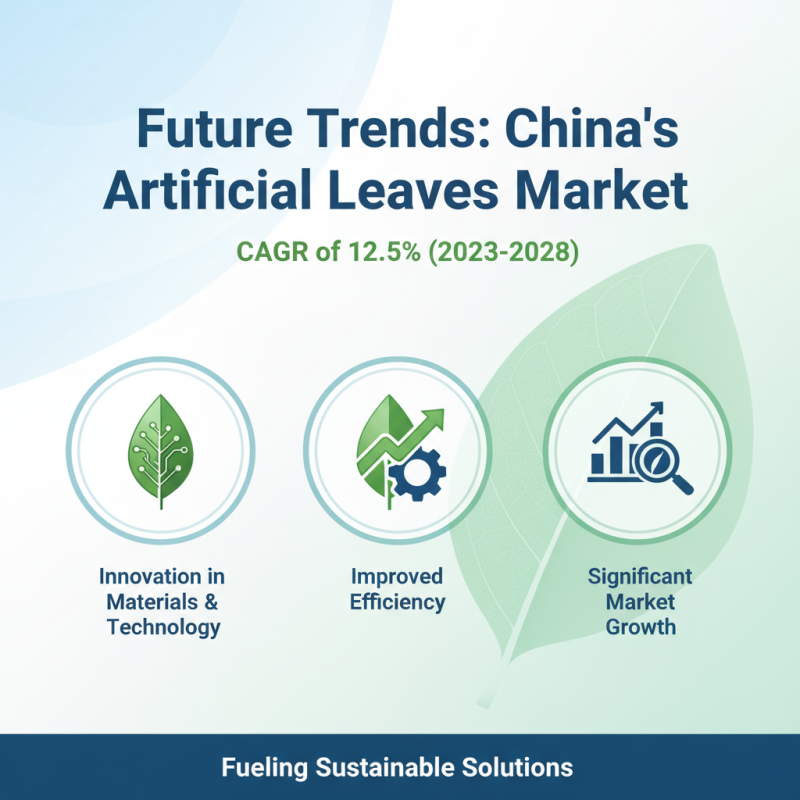
The artificial leaves market in China is evolving. Recent reports predict significant growth, estimating a compound annual growth rate (CAGR) of 12.5% from 2023 to 2028. This growth is fueled by innovations in materials and technology. Improved efficiency is a key driver, as manufacturers seek more effective ways to mimic natural processes.
Presently, research highlights the increasing popularity of biodegradable materials in artificial leaf production. This shift aligns with global sustainability trends, focusing on eco-friendly solutions. However, challenges remain. Not all materials meet desired efficiency levels. Some synthetic polymers struggle to achieve optimal energy conversion rates. This gap indicates the need for further research and development.
Experts emphasize the importance of collaborations between universities and industries. Such partnerships can bridge the knowledge gap. Addressing technical challenges requires interdisciplinary approaches. The future lies in integrating advanced technologies like nanotechnology, which could enhance photosynthetic efficiency. Despite potential pitfalls, the artificial leaf market shows promise, paving the way for sustainable energy solutions in the coming years.